✨ New Arrivals Just Dropped!Explore

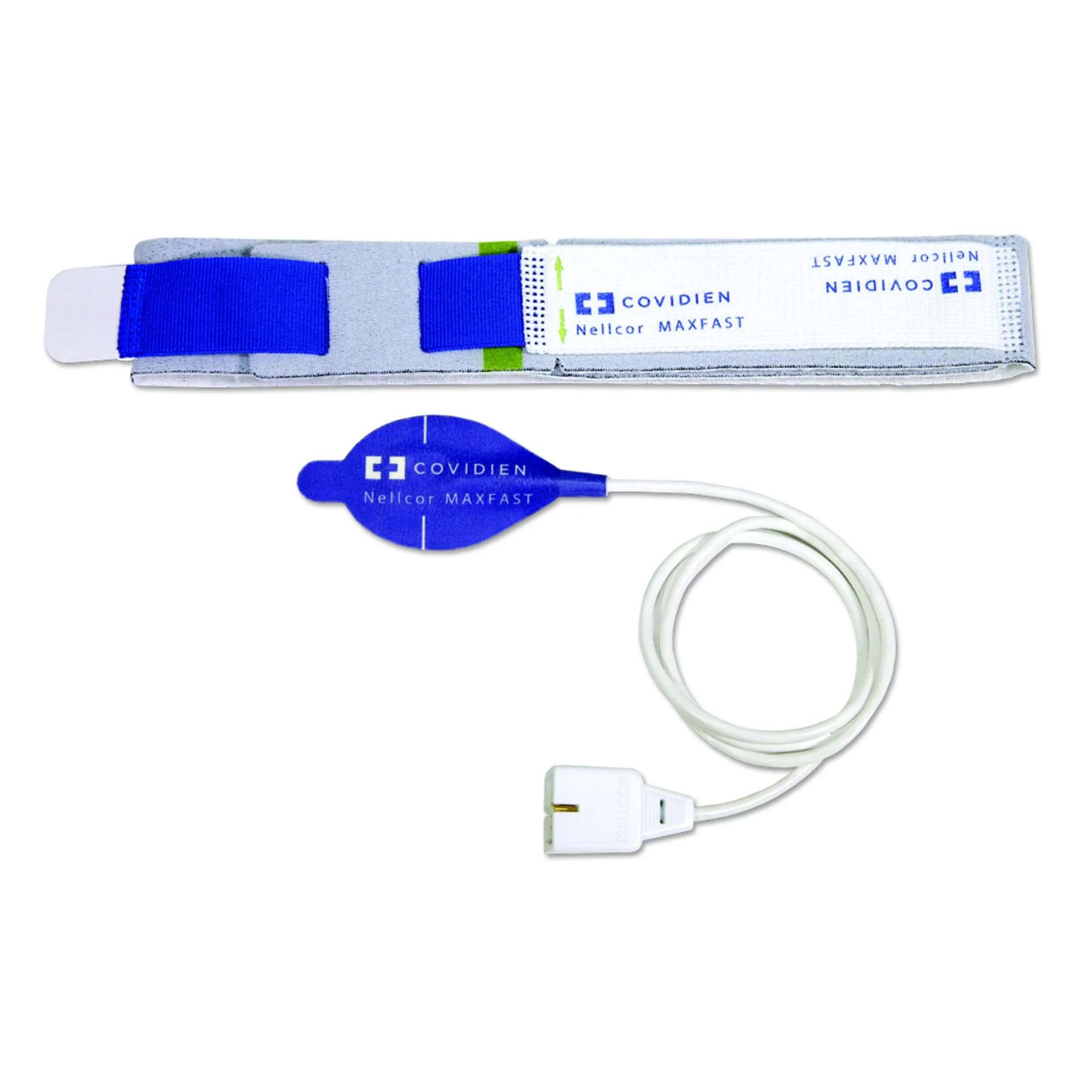
Spo2 Sensor Oximax™ Max-fast™ Forehead Adult Single Patient Use
- Designed for use on the patient’s forehead, a site closer to the heart, the max-fast™ forehead sensor responds to changes in arterial oxygen saturation typically one to two minutes sooner than digit sensors for patients with weak pulses.
- Unlike ear sensors, which may cause pressure necrosis and are subject to vasoconstriction, the max-fast™ sensor maintains stronger signal integrity
- Clinicians often have easier access to the forehead than to the hands, especially in the operating room
- The max-fast™ sensor is more accurate than all other ear, nose and forehead sensors. it also has our industry-leading losat™ expanded accuracy range (60% to 100% spo2) when used with nellcor™ oximax™ pulse oximetry, for better management of patients with congenital heart disease
- Effective for mechanically ventilated and supine patients.
- The Nellcor™ SpO2 forehead sensor detects hypoxic events 90 seconds faster
- Designed for use on the patient’s forehead, a site closer to the heart, the max-fast™ forehead sensor responds to changes in arterial oxygen saturation typically one to two minutes sooner than digit sensors for patients with weak pulses.
- Unlike ear sensors, which may cause pressure necrosis and are subject to vasoconstriction, the max-fast™ sensor maintains stronger signal integrity
- Clinicians often have easier access to the forehead than to the hands, especially in the operating room
- The max-fast™ sensor is more accurate than all other ear, nose and forehead sensors. it also has our industry-leading losat™ expanded accuracy range (60% to 100% spo2) when used with nellcor™ oximax™ pulse oximetry, for better management of patients with congenital heart disease
- Effective for mechanically ventilated and supine patients.
- The Nellcor™ SpO2 forehead sensor detects hypoxic events 90 seconds faster
Select Packaging
From $12.88
Original: $42.95
-70%Spo2 Sensor Oximax™ Max-fast™ Forehead Adult Single Patient Use—
$42.95
$12.88Description
- Designed for use on the patient’s forehead, a site closer to the heart, the max-fast™ forehead sensor responds to changes in arterial oxygen saturation typically one to two minutes sooner than digit sensors for patients with weak pulses.
- Unlike ear sensors, which may cause pressure necrosis and are subject to vasoconstriction, the max-fast™ sensor maintains stronger signal integrity
- Clinicians often have easier access to the forehead than to the hands, especially in the operating room
- The max-fast™ sensor is more accurate than all other ear, nose and forehead sensors. it also has our industry-leading losat™ expanded accuracy range (60% to 100% spo2) when used with nellcor™ oximax™ pulse oximetry, for better management of patients with congenital heart disease
- Effective for mechanically ventilated and supine patients.
- The Nellcor™ SpO2 forehead sensor detects hypoxic events 90 seconds faster